

 English
 русский
 Español
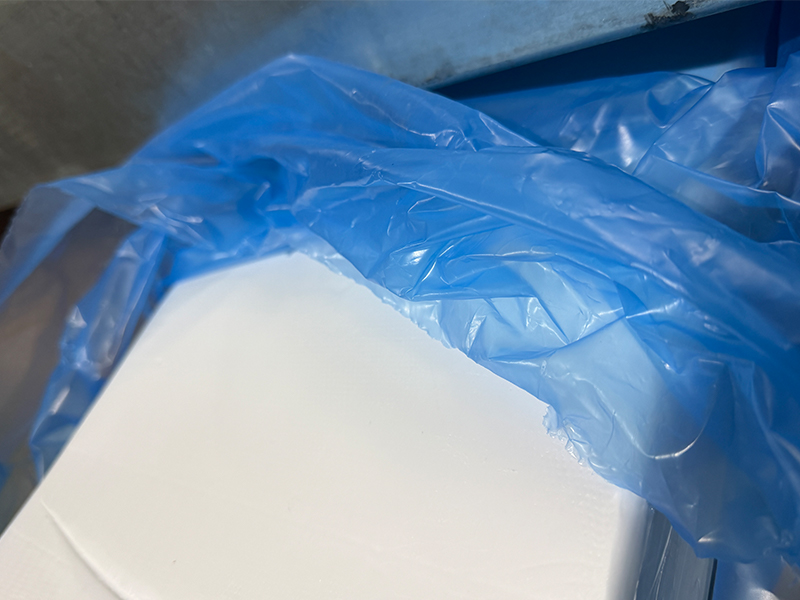
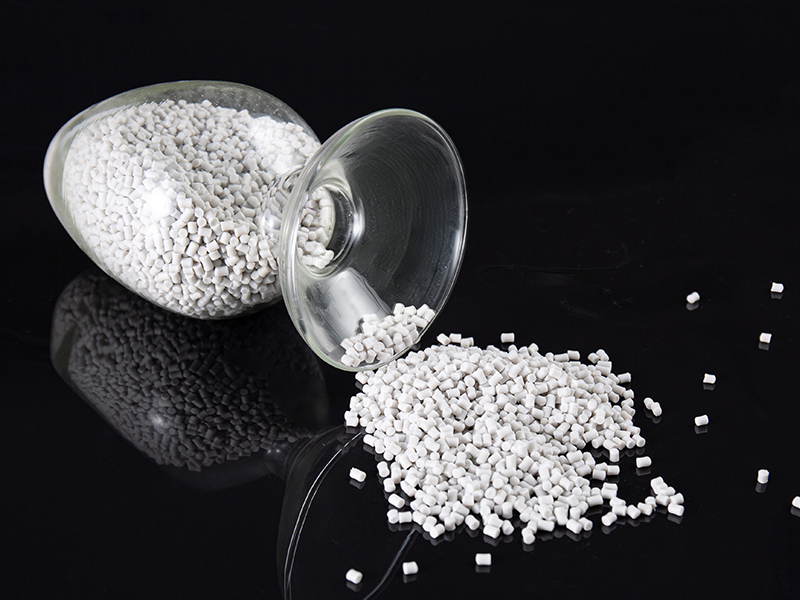
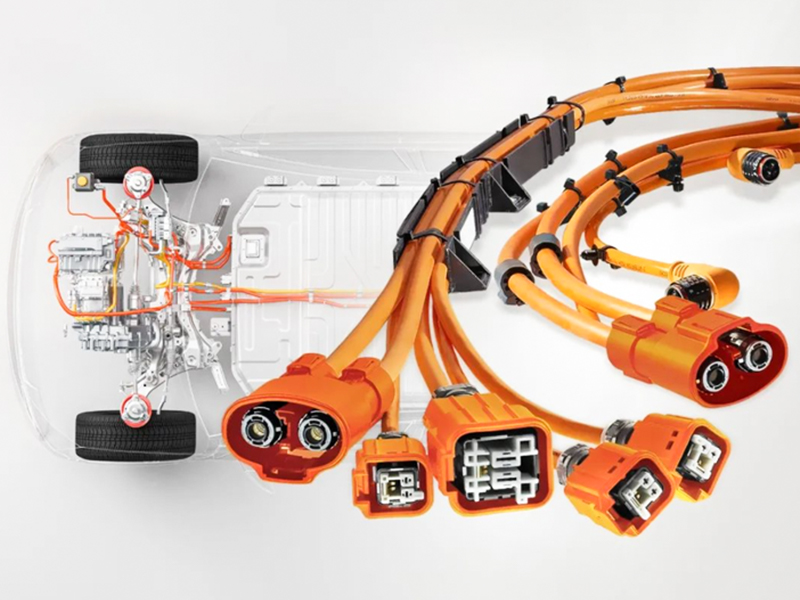
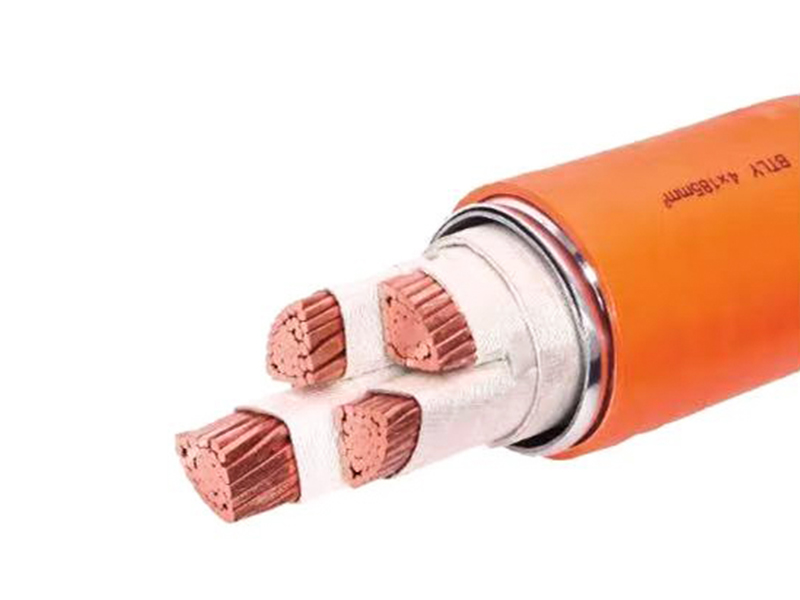
Introduction: The Critical Role of Fumed Silicone Rubber in Advanced Industries In automotive turbo...
READ MORE

Custom Industrial Silicone Rubber Compound Factory
About Us
Liyang Tiansheng Insulating Materials Co., Ltd.
Liyang Tiansheng Insulating Materials Co., Ltd. is China Custom Special Silicone Rubber Factory and Industrial Silicone Rubber Compound Suppliers, founded in 2013. It is a professional service provider dedicated to application solutions for flame‑retardant and fire‑resistant insulation materials, as well as thermal runaway solutions.
Boasting a strong technical team and more than 40 professional employees, Liyang Tiansheng produces technically mature products at an advanced industry level. The company serves the top ten cable manufacturers in China, including Jiangsu Shangshang, New Far East, and Hengtong Group.
Liyang Tiansheng focuses on promoting new‑type fire‑resistant silicone materials and silicone applications for aerospace, nuclear power, new energy vehicles, and related components. Its core business covers various special silicone rubber products for cable manufacturers. After years of steady development, the company now has an annual production capacity of 5,000 tons of various special silicone rubber and fire‑resistant insulation products, with annual sales exceeding 50 million yuan.
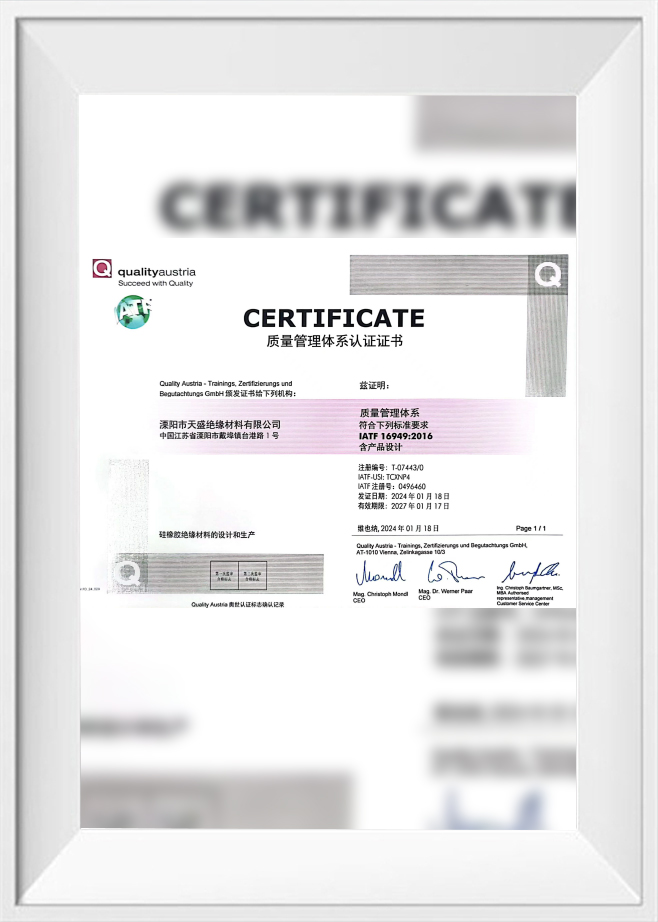
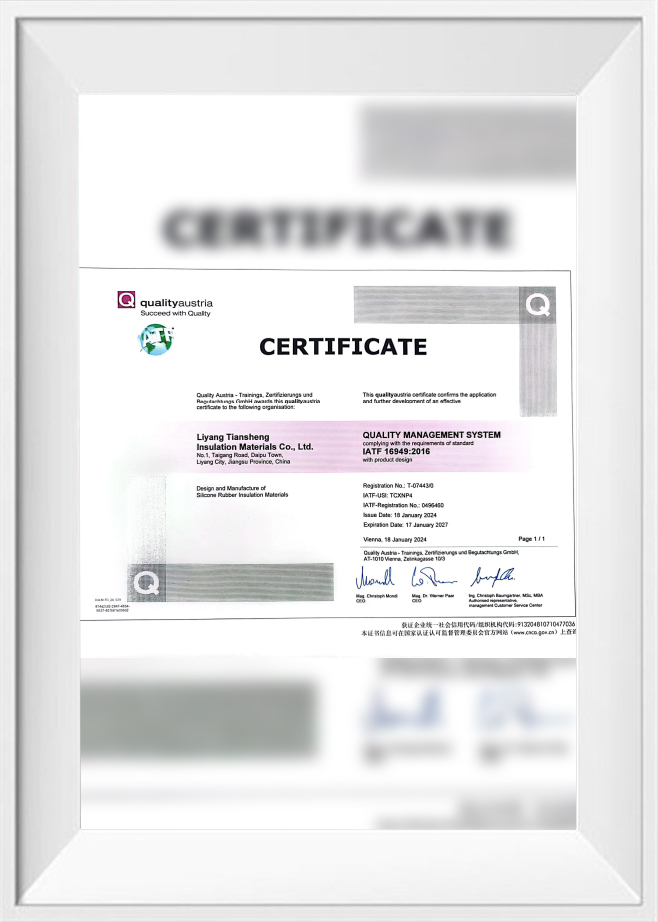
The company mainly uses high‑quality imported raw materials and specialized products from listed companies as its key production materials. Production processes are managed in accordance with the IATF 16949 new energy management system. Supported by extensive practical experience, a rigorous working attitude, and a complete testing system, the company ensures the quality of its products and services. Its professional and technical capabilities remain at the leading level among domestic counterparts. We offer Silicone Rubber Products for sale.
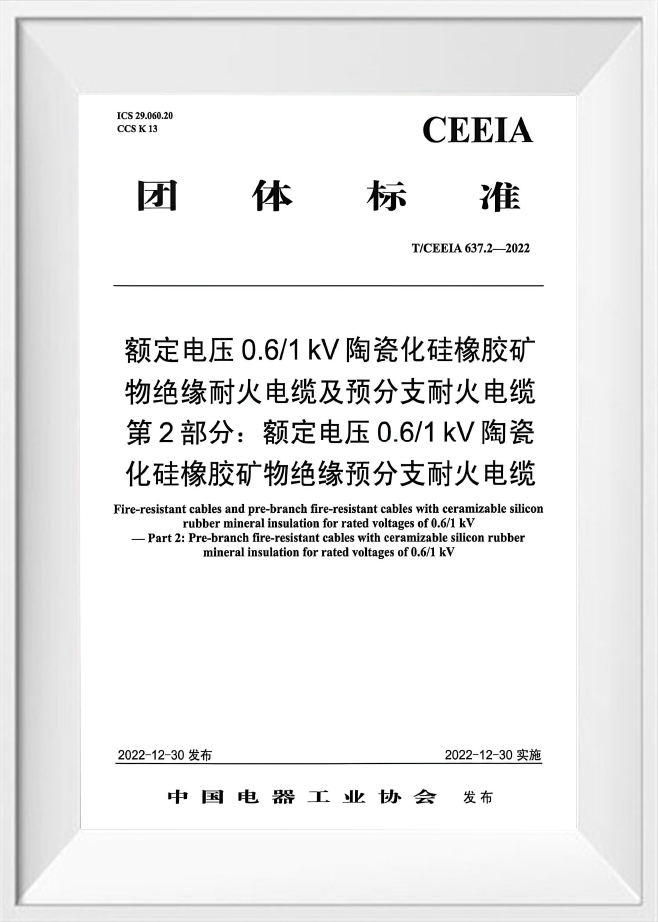
Certificate of Honor
News
-
-
Selecting a reliable silicone rubber supplier is one of the most critical decisions a manufacturer ...
READ MORE -
Understanding Silicone Rubber Products and Their Market Presence Silicone rubber has become indisp...
READ MORE -
Understanding Silicone Rubber Gaskets in Industrial Applications Silicone rubber gaskets have becom...
READ MORE -
What Happens Inside the Insulation When Flame Makes Contact Most cable insulation fails in fire for...
READ MORE -
High Voltage Cable Architecture in Electric Vehicle Powertrains Every electric vehicle depends on a...
READ MORE
Product Industry knowledge
What is industrial silicone rubber compound made of?
Industrial silicone rubber compound is a high-performance elastomeric material engineered for demanding industrial applications. Unlike commodity rubbers, it is a formulated system—a precise blend of silicone polymers, reinforcing agents, crosslinkers, and specialty additives designed to meet specific performance criteria. This article examines the compositional architecture of industrial silicone rubber compound, exploring how its ingredients work together to deliver exceptional thermal stability, electrical insulation, and flame resistance. For manufacturers of silicone rubber products, understanding this formulation is essential for selecting the right material for applications ranging from fire-resistant cables to new energy vehicle components. Liyang Tiansheng Insulating Materials Co., Ltd. has developed particular expertise in this field, specializing in special silicone rubber solutions for the cable and new energy industries.
1. The Polymer Backbone: Foundation of Performance
The base of any industrial silicone rubber compound is a silicone polymer—typically polydimethylsiloxane (PDMS) or polymethylvinylsiloxane (VMQ). These polymers consist of a silicon-oxygen backbone with organic side groups, providing the material's characteristic flexibility and thermal stability. The molecular weight and vinyl content of the polymer are carefully selected to balance processability with final mechanical properties. For high-performance silicone rubber products, Liyang Tiansheng Insulating Materials Co., Ltd. primarily uses high-quality imported raw materials and specialized products from listed companies as key production materials. This ensures the polymer backbone meets the rigorous consistency requirements of the IATF 16949 new energy management system under which the company operates. The polymer is the canvas upon which all other performance characteristics are painted, determining the compound's fundamental elasticity and resistance to degradation.
2. Reinforcing Fillers: Building Mechanical Strength
Silicone polymer alone has low tensile strength. To transform it into a useful engineering material, reinforcing fillers—most commonly fumed silica—are incorporated. Fumed silica, with a specific surface area typically between 100 and 400 m²/g, provides significant reinforcement through hydrogen bonding and physical entanglement with the polymer chains. The surface of the silica is often treated with hydrophobizing agents such as hexamethyldisilazane or silane coupling agents to improve dispersion and prevent "crepe hardening" during storage. Liyang Tiansheng Insulating Materials Co., Ltd. has an annual production capacity of 5,000 tons of various special silicone rubber and fire-resistant insulation products, reflecting its expertise in managing these complex filler-polymer interactions. The company serves the top ten cable manufacturers in China, including Jiangsu Shangshang, New Far East, and Hengtong Group, where consistent mechanical properties are critical.
3. Additive Systems: Tailoring for Application
Beyond polymer and filler, a range of additives fine-tune the compound for specific applications. These include:
- Crosslinking agents: Organic peroxides (for heat-cured rubber) or platinum catalysts with organohydrogenpolysiloxane (for addition-cure systems) initiate the vulcanization process.
- Flame retardants: For fire-resistant applications, systems often incorporate ceramic-forming fillers that create a protective layer under high heat.
- Processing aids: Substances like diphenylsilanediol or alkoxy silanes improve filler dispersion and compound workability.
Liyang Tiansheng Insulating Materials Co., Ltd. focuses on promoting new-type fire-resistant silicone materials and silicone applications for aerospace, nuclear power, new energy vehicles, and related components. This focus is reflected in its use of advanced additive systems that provide thermal runaway solutions—a critical requirement in modern battery and cable applications.
4. Product Categories: A Closer Look at Specialized Compounds
Based on the technology employed by Liyang Tiansheng Insulating Materials Co., Ltd., industrial silicone rubber compound can be broadly categorized into three specialized families, each tailored to distinct industrial challenges.
4.1 Ceramic-Forming Silicone Rubber
Definition and Positioning: Ceramic silicone rubber is a next-generation polymer refractory material. At room temperature, it exhibits all the typical properties of conventional silicone rubber—flexibility, elasticity, and electrical insulation. However, when exposed to high temperatures (typically 350°C to 3000°C), it undergoes a unique transformation: it ceramizes to form a hard, self-supporting ceramic layer. This ceramic shell provides exceptional fire resistance and thermal insulation, effectively protecting underlying substrates during a fire.
Core Functionality and Technical Characteristics: The key to this technology lies in the inclusion of ceramic precursors—special fillers and fluxing agents—within the compound. Upon heating, these precursors sinter together, forming a cohesive ceramic body that maintains structural integrity and prevents flame penetration. Liyang Tiansheng produces ceramic series products that maintain all the properties of silicone rubber at room temperature while offering excellent fire resistance and fire retardancy. The material also provides low smoke toxicity (ZA1 level) and is free from halogens, phosphorus, and heavy metals.
Typical Applications: This material is primarily used for fire-resistant and refractory layers, insulation layers, and sheaths of wire and cable. It is widely employed in the production of medium and low voltage fire-resistant cables, control cables, automotive wires, home improvement wires, ship cables, and mining cables. It is also finding increasing use in new energy vehicle power batteries, where it isolates heat between cells and modules, preventing single-cell damage from escalating into chain combustion.
Differentiation and Company Capabilities: Compared to standard flame-retardant silicone rubbers, ceramic-forming compounds offer active fire protection—they form a physical barrier rather than simply slowing flame spread. Liyang Tiansheng has developed this technology as part of its core business, leveraging its expertise in flame-retardant and fire-resistant insulation solutions to supply products that meet the rigorous requirements of the cable and new energy sectors.
4.2 Ceramic Self-Adhesive Tape
Definition and Positioning: Ceramic self-adhesive tape is a specialized derivative product composed of self-melting silicone rubber combined with an isolation film. It combines the fire-protective properties of ceramic silicone rubber with a practical application format. Unlike traditional mica tape, this product offers superior flexibility, self-adhesion, and ease of installation, making it ideal for complex geometries and field repairs.
Core Functionality and Technical Characteristics: The tape exhibits excellent high and low temperature resistance, enabling long-term service from -60°C to 180°C, with emergency overload capability up to 300°C. Key features include exceptional anti-arc and anti-tracking properties, outstanding electrical insulation, and good self-adhesive properties that allow for complete self-fusion in a short time without delamination. It is also non-tacky to the touch and will not stain the substrate.
Typical Applications: This tape is widely used in high-voltage cable heads to provide anti-arc and anti-tracking protection. It is also applied for insulation protection in electrical cabinets, H-class temperature-resistant insulation, and emergency pipeline repairs. Additional uses include sealing water pipes and faucet joints, as well as providing buffer protection for sporting goods and tool grips.
Differentiation and Company Capabilities: The self-adhesive tape format differentiates this product from bulk compounds, offering ease of application in field installations and maintenance scenarios. Liyang Tiansheng provides this product with a typical dielectric strength of 22 kV/mm and volume resistivity of 3.20×10¹⁴ Ω·cm, backed by its robust testing system. The company's rigorous working attitude and complete testing system ensure the quality of this critical safety component.
4.3 Ceramic Composite Tape
Definition and Positioning: Ceramic composite tape, also known as refractory tape, is a refractory insulating material made by combining fire-resistant silicone rubber with high-temperature glass fiber cloth. This composite construction provides enhanced mechanical strength and dimensional stability compared to pure silicone rubber tapes.
Core Functionality and Technical Characteristics: Like other ceramic-forming products, this tape forms a ceramic shell under flame or flameless conditions at 350°C to 3000°C. It offers excellent fire resistance and fire retardancy, with the added benefit of high strength, elasticity, and self-adhesion. A key advantage is its cost-effectiveness—it has a lower specific gravity than mica tape and can be used as a direct replacement. Importantly, combustion produces low smoke and non-toxic gases, with the flue gas toxicity reaching the ZA1 safety level.
Typical Applications: The primary application is as a fire-resistant and refractory layer for wires and cables, serving as an alternative to mica tape. It can be used as both the fire-resistant layer and the insulating layer, simplifying cable construction. Its low price, high cost-performance ratio, and ease of processing make it attractive for high-volume cable manufacturing.
Differentiation and Company Capabilities: The composite tape offers a unique balance of performance and economy. Liyang Tiansheng produces this tape with a tensile strength of 9 MPa and bending strength after burning of 15 MPa, exceeding typical requirements. The company's annual sales exceeding 50 million yuan reflect the market demand for such high-performance, cost-effective solutions. Its professional and technical capabilities, supported by a strong technical team of over 40 employees, remain at the leading level among domestic counterparts.
Comparative Overview: Key Performance Parameters
| Property | Ceramic Silicone Rubber | Ceramic Self-Adhesive Tape | Ceramic Composite Tape |
| Ceramization Temperature | 650°C – 3000°C | Forms ceramic layer under fire | 350°C – 3000°C |
| Oxygen Index | ≥28% | - | ≥34% |
| Dielectric Strength | ≥21 kV/mm | 22 kV/mm | ≥20 kV/mm (before burning) |
| Key Differentiator | Direct replacement for mica tape; high flexibility | Self-adhesive; easy field application | Cost-effective; high mechanical strength |
5. Frequently Asked Questions
Q1: What is the difference between ceramic silicone rubber and standard flame-retardant silicone rubber?
Standard flame-retardant silicone rubber is designed to resist ignition and slow flame spread. Ceramic silicone rubber, on the other hand, goes a step further: at high temperatures, it actively transforms into a rigid ceramic shell that physically isolates the substrate from the flame, providing a higher level of fire protection and thermal insulation.
Q2: How does industrial silicone rubber compound contribute to new energy vehicle safety?
Industrial silicone rubber compound, particularly ceramic-forming grades, is critical for new energy vehicle safety. It is used in high-voltage cables and battery modules to provide thermal runaway protection. By forming a ceramic barrier under extreme heat, it isolates individual battery cells, preventing thermal propagation—a key requirement for preventing chain combustion in EVs.
Q3: What quality standards does Liyang Tiansheng Insulating Materials Co., Ltd. follow in producing silicone rubber products?
Liyang Tiansheng manages its production processes in accordance with the IATF 16949 new energy management system. The company maintains a complete testing system to ensure product quality, backed by more than 40 professional employees and a strong technical team. Its professional and technical capabilities remain at the leading level among domestic counterparts.
Q4: Can special silicone rubber materials replace mica tape in cable applications?
Yes. Ceramic silicone rubber and ceramic composite tape are specifically designed as alternatives to mica tape for fire-resistant cable applications. They offer advantages such as lower specific gravity (reducing cable weight), no moisture absorption, higher strength, and in some cases, self-adhesive properties that simplify manufacturing. For a full range of special silicone rubber products, please refer to the company's product portfolio.

Subscribe to Newsletters
What to stay up to date?
Contact us via the email address below.
Head office
No. 16, Industrial Concentration Zone, Daibu Town, Liyang City, China
Scan code
Email
lyts@lyts2023.com
Phone
+86-17625747685
Tel
+86-519-87902211
Copyright 2026 Liyang Tiansheng Insulating Materials Co., Ltd. All Rights Reserved.
Custom Silicone Rubber Products Suppliers

Are You Interested?
Are You Interested?
