

 English
 русский
 Español
Are You Interested?
Are You Interested?


Content
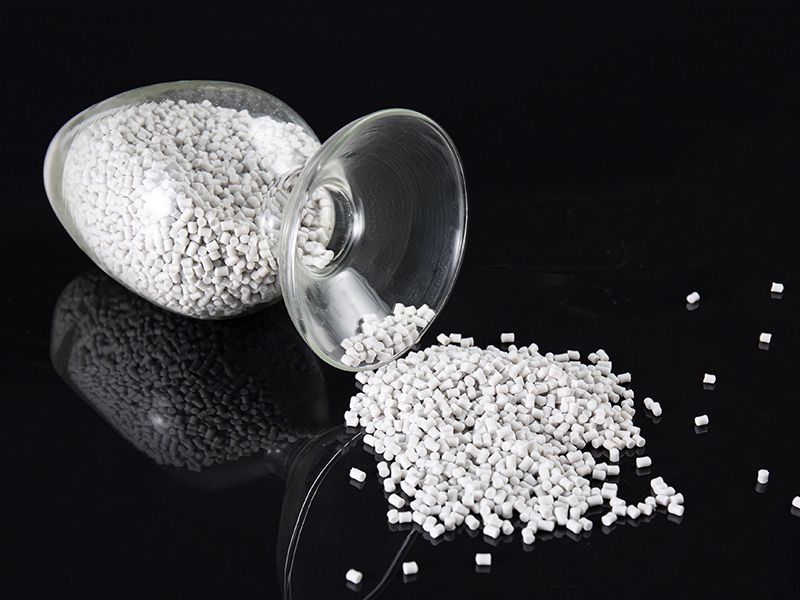
Procurement teams rarely need a material that simply resists heat. They need a material that keeps a cable run intact, shields a battery compartment, or keeps a pipe jacket functional for a defined period while temperatures climb. A ceramifiable TPO compound is designed for exactly this job. It starts as a flexible thermoplastic polyolefin that can be extruded or injection molded like a conventional compound, then transforms under high heat into a rigid, porous, ceramic-like residue that retains its structure.
The distinction matters during specification. A standard flame-retardant polyolefin may char, soften or melt away once temperatures pass its limit. A ceramifiable grade is engineered so that inorganic fillers soften, flow and bond together as the organic matrix burns off, leaving a skeleton that holds its shape and continues to act as a thermal and flame barrier.
The transformation happens in stages, and each stage affects a different part of the performance you will test or certify. The diagram below summarizes the sequence that most engineers use when they review a datasheet.
Ceramification is not a single temperature. It is a window, and the lower edge tells you when protection begins while the upper edge indicates how tightly the residue densifies. Commercial grades in this family typically begin forming a ceramic phase somewhere in the mid 500s to 600s degrees Celsius, with densification continuing toward the high 800s and around 1000 degrees Celsius. A supplier who can shift this window to match your fire test or operating temperature is demonstrating real formulation control, not simply offering a single catalog product.
Buyers should confirm whether the quoted window was measured on specimens with a geometry, thickness and heating rate similar to their application. A slow furnace ramp and a rapid flame impingement can produce different residue quality even from the same compound. Asking for the test conditions is as important as asking for the result.
A good datasheet gives you numbers you can compare across suppliers. The cards below highlight the four values that most procurement reviews start with, followed by a fuller parameter table you can use as a working reference.
Ceramification start point, customizable within a defined range.
Target residue strength after 1000 degrees Celsius for 30 minutes.
Grams per cubic centimeter, which affects weight and cost per meter.
Common vertical burn classification required in many cable and enclosure specs.
| Parameter | Typical range or description | Why it matters |
|---|---|---|
| Base resin | TPO blend with polyethylene or polypropylene segments | Sets flexibility, low-temperature behavior and extrusion response |
| Ceramification onset | 550 to 650 degrees Celsius, customizable | Defines when fire protection begins |
| Residue strength retention | At least 80 percent after 1000 degrees Celsius for 30 minutes | Shows whether the residue can still carry load |
| Extrusion window | 180 to 220 degrees Celsius | Guides screw design, die temperature and throughput |
| Density | 1.05 to 1.15 grams per cubic centimeter | Influences part weight and material cost |
| Flame classification | V-0 target under vertical burn testing | Frequently mandated by cable and enclosure standards |
Three cautions apply when you compare these values. First, a retention figure is only meaningful when you know the specimen thickness and test atmosphere. Second, a density range should be read alongside the filler content, because higher filler loading can raise density while changing extrusion behavior. Third, a flame classification describes a single test method, so it does not automatically predict performance in a full cable assembly.
A ceramifiable compound is only useful if it can be processed consistently on your equipment. The flame-retardant and filler systems that enable ceramification are sensitive to thermal history, so processing discipline matters more than with a plain polyolefin. Most problems traced back to a failed burn test begin with an overheated barrel or inconsistent drying.
| Process | Key setting focus | Risk if off target |
|---|---|---|
| Drying | Moisture removal per datasheet guidance | Bubbles, streaks and surface roughness |
| Extrusion | Barrel zones within 180 to 220 degrees Celsius | Uneven wall thickness and weak residue layers |
| Injection molding | Moderate mold temperature and short residence time | Flash, warpage and sink marks |
| Cooling | Controlled water bath or air profile | Dimensional drift and internal stress |
Application engineers usually describe ceramifiable materials by the failure they prevent rather than by the material name. The same compound can serve very different roles depending on whether the priority is circuit integrity, thermal separation or sealing against heat and flame.
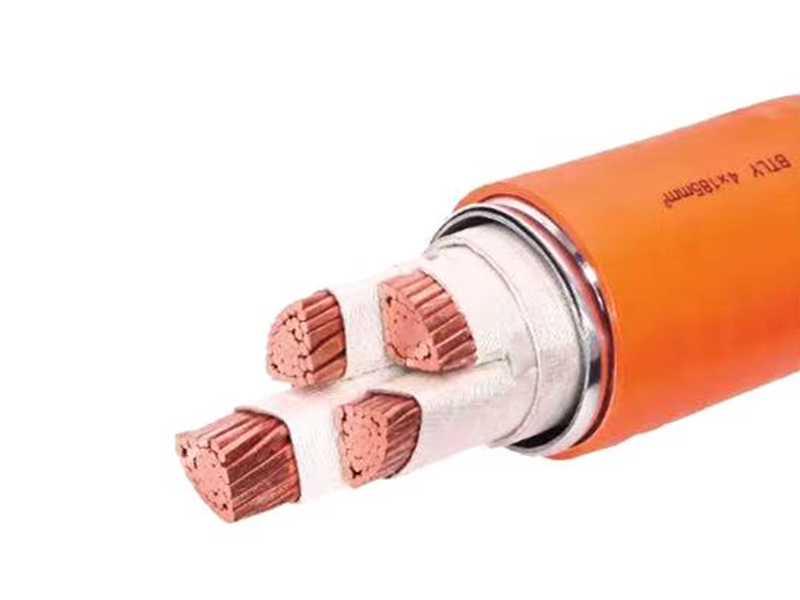
In cable designs, a ceramifiable jacket or insulation layer is intended to maintain circuit integrity during fire exposure. As the outer layers burn, the residue forms a shell that can keep conductors separated long enough for emergency systems to remain operational. Designers typically evaluate the residue for crack formation, adhesion to the conductor and continuity during a defined fire test.
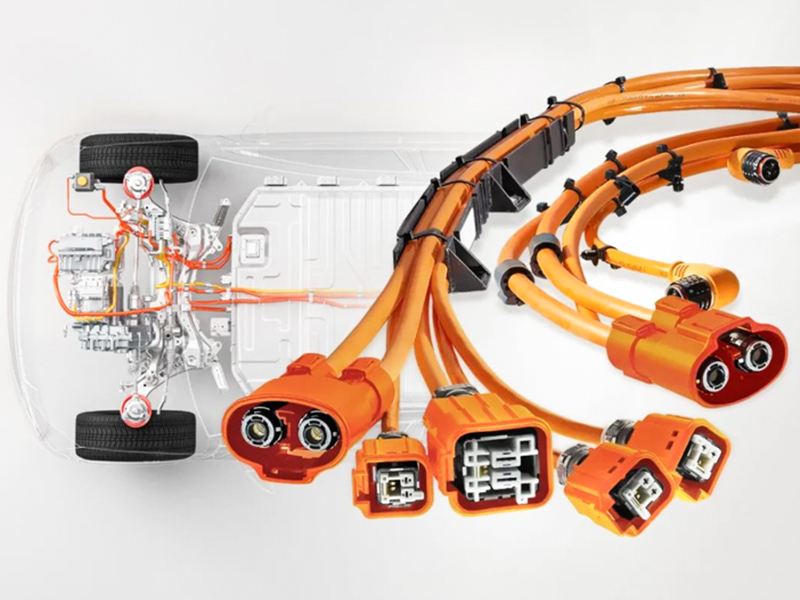
In vehicles and rail systems, ceramifiable TPO parts are used where a moldable barrier must withstand short but intense heat events. Battery enclosure separators, heat shields near exhaust routing and protective panels around high-voltage components are common examples. Here the material must balance thermal protection against weight, vibration resistance and the ability to be molded into complex shapes.
Industrial plants often use ceramifiable parts to protect pipe penetrations, cable trays and equipment supports. The value lies in a compound that can be injected or extruded into a precise profile during manufacturing and then serve as a passive fire barrier throughout the asset life. Because these parts sit inside building and process designs, dimensional consistency and documentation are often as important as the fire performance itself.
Buyers who search for a supplier have usually already confirmed that the material type fits their design. The remaining question is whether the source can deliver the same material, in the same window, at the same quality, month after month. Technical data gets a supplier onto the shortlist. Operational evidence decides the order. When you compare each ceramifiable TPO compound supplier on your list, use the same evaluation frame so the answers can be compared directly.
Ask for monthly or annual production capacity for the specific grade you need, not only the plant total. A plant may run several product families, and capacity for a specialized ceramifiable grade can be much lower than headline figures suggest. Request standard lead time for stocked grades and a separate lead time for customized formulations, since custom development and validation can add several weeks.
Minimum order quantity influences both the sample phase and the production phase. For pilot trials, look for a supplier who can release smaller lots for validation without forcing you into a full production commitment. For production, confirm packaging options such as small drums, large bags or bulk containers, and check whether the packaging is compatible with your feeding system and storage conditions.
Consistency is the strongest signal of supplier maturity. Ask for melt flow variation across recent batches and the tolerance the supplier holds internally. A variation of a few percent is typical for well-controlled production, while wider swings suggest weak raw material control or limited in-process testing. Quality management certification, such as an ISO 9001 system, indicates that these controls are documented rather than informal.
| Evaluation item | What to request | Possible red flag |
|---|---|---|
| Capacity | Grade-specific monthly output | Only total plant capacity is given |
| Lead time | Separate standard and custom timelines | One vague timeline for everything |
| MOQ | Pilot lot and production lot options | No option for trial quantities |
| Consistency | Melt flow variation across batches | No batch records available |
| Quality system | Certificate scope and audit history | Certificate covers unrelated activities |
A complete documentation package allows your quality and engineering teams to approve a material without repeating every test. It also shortens audit cycles when your own customers ask for traceability. The most useful packages combine a technical datasheet, a safety data sheet and test evidence that clearly states the conditions under which it was generated.
Most specification problems are not caused by weak materials. They come from mismatches between the test that was approved and the conditions the product will actually face. The following mistakes appear often in reviews.
Avoiding these errors usually requires a short joint review between purchasing, quality and application engineering. Sharing the operating temperature, the required protection time and the processing equipment early gives the supplier enough information to recommend a suitable grade and realistic lead times.
A standard flame-retardant TPO aims to slow ignition and limit flame spread, but the material may still soften or lose structure at high temperature. A ceramifiable grade is designed to form a load-bearing residue that continues to act as a barrier after the organic matrix has burned away.
Look for the onset of ceramification and the temperature at which residue strength is reported. Commercial grades in this family commonly begin forming a ceramic phase in the mid 500s to 600s degrees Celsius, but the right window depends on your fire test and operating conditions.
Compare pilot lot availability separately from production MOQ. A supplier that accepts smaller trial quantities makes validation faster and reduces the risk of committing to a large order before the material has been tested on your equipment.
Many suppliers can adjust filler systems and formulation balance to shift the ceramification window. Customization usually requires a development period and sample validation, so ask for both the standard lead time and the custom development timeline when you request a quote from a ceramifiable TPO compound supplier.
At minimum, request the technical datasheet, the safety data sheet, a third-party flammability test report for the specific grade, environmental declarations, a quality certificate with clear scope and residue photographs with test details. Where your own customers require traceability, ask whether batch records can be provided. Complete documentation for a ceramifiable TPO compound speeds up qualification and reduces rework during audits.

What to stay up to date?
Contact us via the email address below.
No. 16, Industrial Concentration Zone, Daibu Town, Liyang City, China
Copyright 2026 Liyang Tiansheng Insulating Materials Co., Ltd. All Rights Reserved.
Custom Insulation Material For Cable Industry Suppliers

