

 English
 русский
 Español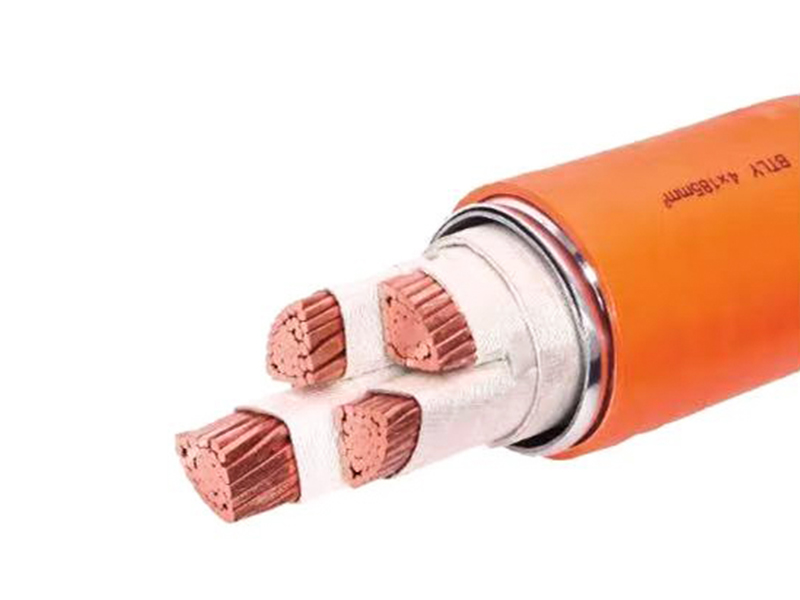
Are You Interested?
Are You Interested?


Content
When a cable jacket or insulation sleeve is exposed to open flame, most polymers do one of two things: they burn away and disappear, or they char into a brittle crust that crumbles under mechanical stress. Ceramifiable silicone rubber behaves differently. Instead of losing mass and structural function, the material undergoes a controlled chemical transformation that converts the soft, flexible rubber into a rigid, ash-like ceramic layer while the fire is still burning. This in-situ shield is what allows wiring, busbars, and structural penetrations to keep working long after the surrounding polymer would normally have failed.
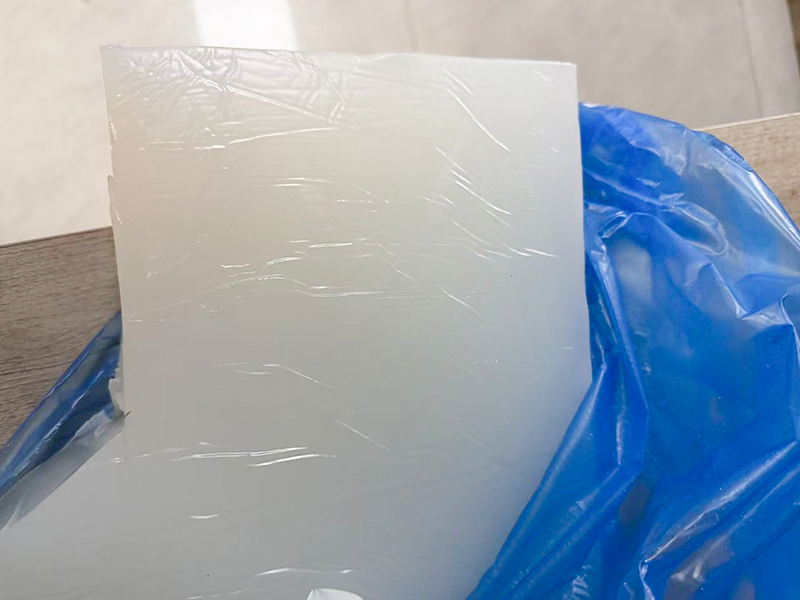
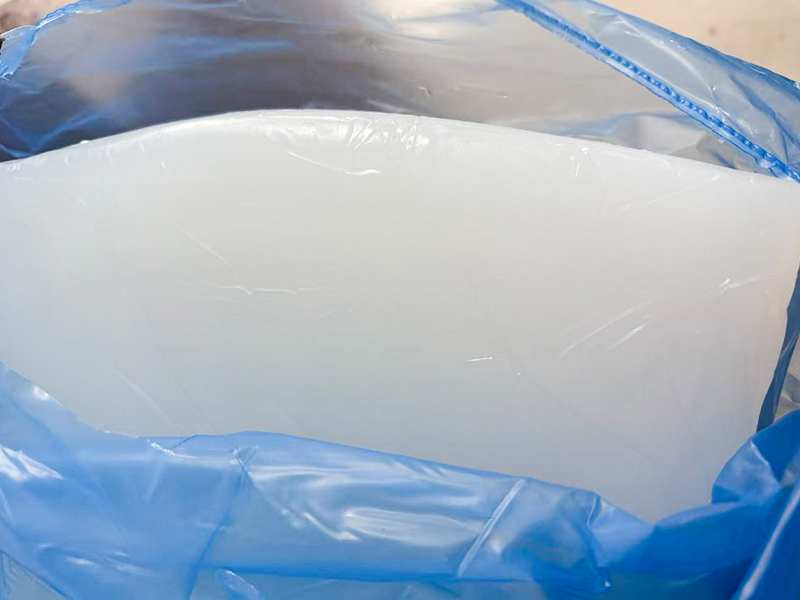
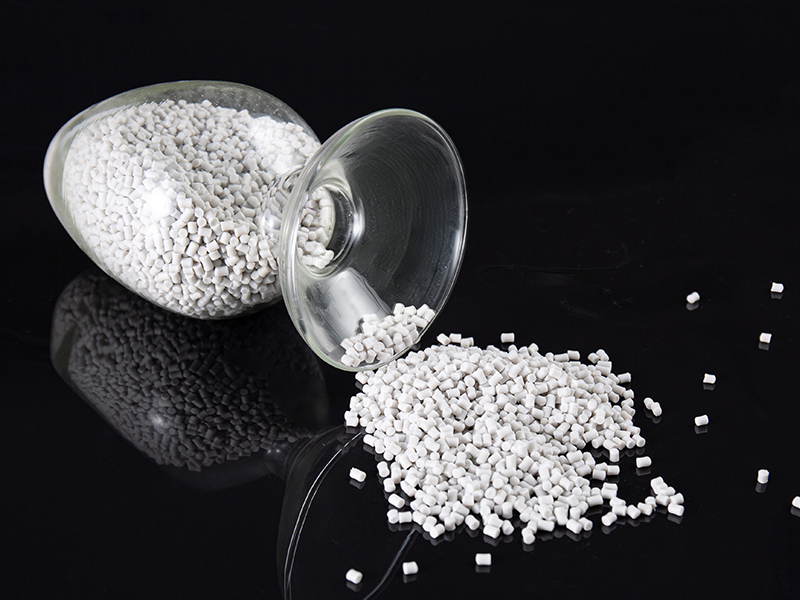
The underlying chemistry relies on a base silicone elastomer that has been compounded with specific mineral fillers, flux agents, and reinforcing fibers. As heat rises past a defined threshold, these fillers begin to interact with the silicone backbone and with each other, forming new mineral bonds. The result is not simply burned rubber; it is a newly formed ceramic composite that retains the original shape of the part. Products engineered around this principle, such as tc-9710 ceratifiable fire-resistant silicone rubber, are formulated so that this transformation happens predictably across a defined temperature window rather than randomly or incompletely.
This section sets the stage for the rest of the discussion: how the shield actually forms, what happens at each thermal stage, why the resulting ash retains its shape instead of falling apart, and how this compares with more conventional fire-resistant insulation strategies.
What separates a genuinely engineered ceramifiable compound from a simple mineral-loaded rubber is predictability. Facility engineers and cable designers do not just need a material that can eventually form some kind of ceramic residue; they need one that converts within a known temperature band, produces a consistent shell thickness, and behaves the same way across production batches. That consistency is what allows the technology to be specified with confidence for circuits that genuinely need to keep functioning while a structure is on fire, rather than simply slowing the spread of flame along the surface of the cable.
The ceramic conversion process is best understood as a sequence of overlapping reactions rather than a single event. As flame contacts the rubber surface, the organic side groups on the silicone chain begin to decompose first, releasing volatile byproducts and leaving behind a silica-rich skeleton. Almost simultaneously, the mineral fillers dispersed through the compound start to soften and migrate toward the exposed surface, where they begin fusing with the silica skeleton and with each other.
As temperature continues to climb, low-melting flux components act as a kind of chemical glue, lowering the fusion temperature of the surrounding mineral particles so they can bond well before the bulk material would otherwise vitrify. This staged fusion is deliberate: if all the minerals melted and bonded at once, the resulting shell would crack from thermal shock. A gradual, layered fusion instead builds a shield from the outside in, so the outer face stiffens first while the inner layers continue transitioning behind it.
By the time the outer shell has fully fused, it functions as a self-supporting barrier that continues to protect the unconverted rubber beneath it, slowing further heat transfer into the core of the part.
It is worth noting that the conversion sequence is directional as well as sequential. Because the outer surface is the first to experience peak temperature, it is also the first to stiffen, which means the shield essentially builds itself from the outside toward the interior. This directional behavior has a practical benefit: even before the core of the material has fully converted, the outer shell is already acting as an insulating and structural barrier, buying additional time for the underlying conductor or structural element before conditions inside the part become critical.
Engineers who specify fire-resistant insulation shield materials generally think in terms of temperature bands rather than a single ignition point. Each band corresponds to a different physical state of the compound, and understanding these bands helps explain why the material performs the way it does during an actual fire event.
| Stage | Approximate Range | Material Behavior |
|---|---|---|
| Elastomeric | Ambient to moderate heat | Rubber remains flexible and fully functional |
| Decomposition | Moderate to elevated heat | Organic content breaks down, mass loss begins |
| Transitional | Elevated to high heat | Silica skeleton forms, fillers begin migrating |
| Ceramification | High to very high heat | Mineral fusion builds a continuous ceramic shell |
| Stabilized Ash | Sustained very high heat | Shield holds shape and resists further collapse |
The most critical window for a cable or insulation application is the transition between the transitional stage and full ceramification. If the compound is engineered correctly, this window is short enough that the part never spends significant time as a weak, semi-formed shell. A poorly balanced formulation, by contrast, can linger in that transitional state, during which the material is neither flexible rubber nor a solid ceramic, making it vulnerable to mechanical disturbance such as vibration or falling debris during a fire.
This is why filler particle size, flux chemistry, and reinforcement geometry are treated as design variables rather than fixed constants. Adjusting them shifts where each stage begins and how quickly the material passes through the vulnerable transitional zone.
Laboratory characterization of these stages typically involves controlled heating trials where sample sections are held at fixed temperatures for set durations and then evaluated for hardness, dimensional change, and residual mass. Data gathered this way allows formulators to plot exactly where one stage ends and the next begins for a given compound, which then feeds back into decisions about filler loading, fiber content, and flux selection. Without this kind of staged characterization, it would be difficult to know whether a formulation change actually shortens the vulnerable transitional window or simply shifts it to a different temperature range.
A ceramic shield is only useful if it stays where it is needed. Many mineral-filled compounds form ash that is chemically correct but physically fragile, meaning it crumbles away from vibration, airflow from ventilation systems, or the weight of adjacent cables. Ash retention properties describe how well the converted material holds together and stays bonded to the remaining substrate rather than falling off as loose powder.
Reinforcing fibers embedded in the original compound play a major role here. As the surrounding matrix converts to ceramic, these fibers act like rebar in concrete, bridging small cracks and preventing the shell from separating into disconnected fragments. Particle size distribution of the mineral fillers also matters: a well-graded mix of coarse and fine particles packs more tightly during fusion, leaving fewer voids that could later become failure points.
Formulations that combine mixed-length reinforcing fiber with a graded filler package consistently produce the most cohesive ash structures, which translates directly into a shield that continues to block flame, heat, and debris even after extended exposure.
Cohesion is typically evaluated through simple mechanical disturbance testing after a heat cycle, such as light vibration or a gentle probe test, to see how much of the converted ash remains attached to the substrate. A compound with poor cohesion may pass a basic flame exposure test yet still fail in a real installation where nearby equipment vibrates or where firefighting activity disturbs the area. This is one reason ash retention deserves as much attention during material selection as the initial conversion temperature itself.
Ceramifiable compounds are one of several strategies used to slow fire spread through cable routes and penetrations, alongside intumescent coatings, mineral-insulated construction, and simple flame-retardant additives in standard rubber. Each approach has a different profile of strengths, and comparing them side by side clarifies where ceramic-forming technology tends to outperform the alternatives.
The comparison makes clear that ceramifiable rubber does not win on every axis. It typically costs more than a standard flame-retardant compound and offers no particular space advantage over mineral-insulated systems. Where it separates itself is post-fire integrity: because the material forms its own rigid ceramic shell rather than depending on an external barrier, it retains circuit continuity and mechanical shape well after standard rubber has failed. This is the core value proposition behind flame barrier technology built around in-situ ceramic conversion rather than passive char formation.
Selecting between these approaches usually comes down to what the circuit or penetration is actually required to do during a fire. If the only goal is to prevent flame from spreading along a cable tray, a lower-cost flame-retardant compound may be entirely adequate. If the goal is to keep a specific circuit energized and functional for a defined survival time, the added cost of a ceramifiable system is generally justified by its ability to retain shape, insulation resistance, and circuit continuity under conditions where simpler materials have already lost mechanical integrity.
A ceramic shield that forms quickly but then degrades under continued heat is of limited practical value. Real fire events often burn for extended periods, and equipment such as emergency lighting circuits, fire pump feeders, and smoke control dampers may need to remain operational for thirty minutes, sixty minutes, or longer depending on the application and local requirements. Structural integrity over time, not just at the moment of ignition, is therefore the more meaningful performance measure.
The gap between these two curves widens the longer the exposure continues. In the earliest minutes, both materials retain reasonable function, but as decomposition and mass loss accumulate in the standard compound, its residual char loses cohesion and begins to open gaps. The ceramifiable material, by contrast, keeps building on its own converted shell, which is why it is frequently specified for circuits and penetrations that must remain functional well past the initial stage of a fire.
This sustained-exposure behavior is particularly relevant for equipment governed by survival-time requirements, such as emergency communication systems, smoke extraction fans, and pressurization systems for stairwells. In these applications the failure mode that matters is not the first few minutes of a fire but the ability to keep operating through the middle and later stages, when structural conditions in the building are most severe and occupants or firefighting teams are most dependent on those systems continuing to function.
Not every ceramifiable formulation performs the same way, and the difference usually comes down to a handful of compositional choices made during compounding.
These variables interact with one another rather than acting independently. A flux agent tuned for rapid bonding, for example, only helps if the filler particle sizing is compatible with that bonding temperature; mismatched components can still produce a shield with unwanted internal stress or uneven density.
Quality control during manufacturing also plays a role that is easy to overlook. Even a well-designed formulation can underperform if mixing is inconsistent, leading to localized pockets where filler concentration is too high or too low. Extrusion and curing parameters need to be held within tight tolerances so that the finished part has uniform density throughout its cross-section, since any internal inconsistency will show up later as uneven ceramic conversion when the part is exposed to heat.
Specifying a ceramifiable compound involves more than checking a single fire rating. Installation geometry matters: cables bundled tightly together will heat differently than a single conductor run in open air, which can shift the timing of ceramic conversion across the bundle. Bend radius and mechanical loading during installation also deserve attention, since a compound optimized purely for high-temperature performance may have different handling characteristics at room temperature than a general-purpose rubber.
Penetration seals, where cables pass through fire-rated walls or floors, present a related challenge. The seal system and the cable jacket need to convert and bond in a compatible way, or a gap can open at the interface even if both materials individually perform well. For this reason, testing at the assembly level, not just the material level, is standard practice for critical life-safety circuits.
Environmental exposure prior to any fire event also plays a role. Long-term exposure to moisture, ultraviolet light, or certain chemical contaminants can alter the surface chemistry of the rubber before it ever needs to convert, which is why storage and installation guidelines typically specify handling conditions alongside the fire performance data.
Maintenance practices over the service life of the installation matter as well. Cables and seals that are inspected periodically for physical damage, correct routing, and proper support are far more likely to perform as tested when an actual fire occurs. A ceramifiable compound that has been nicked, over-bent, or contaminated during years of service may not convert as uniformly as an undamaged sample would, which is why periodic visual inspection remains a recommended part of any fire-rated cable system, regardless of how advanced the underlying material technology may be.
Conversion begins once the material reaches a defined elevated temperature threshold, at which point organic content starts decomposing and the embedded mineral fillers begin fusing into a continuous ceramic layer.
No, the transformation happens in stages over a short but measurable window as heat penetrates the material, moving from decomposition through filler migration and finally full mineral fusion.
Ordinary char is often loose and prone to crumbling, while a well-engineered ceramic ash structure is reinforced internally so it stays bonded and continues functioning as a physical barrier.
Formulations designed for this purpose are specifically engineered to keep their shielding function over extended exposure periods, which is why they are used in circuits that must remain operational during a fire event.
They are best suited to applications where post-fire functionality is a requirement, such as life-safety and emergency circuits, rather than general-purpose wiring where standard flame-retardant materials may be sufficient.
Filler particle size, flux agent chemistry, and reinforcing fiber structure are the primary variables that determine how cohesive and durable the resulting ceramic shield will be.

What to stay up to date?
Contact us via the email address below.
No. 16, Industrial Concentration Zone, Daibu Town, Liyang City, China
Copyright 2026 Liyang Tiansheng Insulating Materials Co., Ltd. All Rights Reserved.
Custom Insulation Material For Cable Industry Suppliers

