

 English
 русский
 Español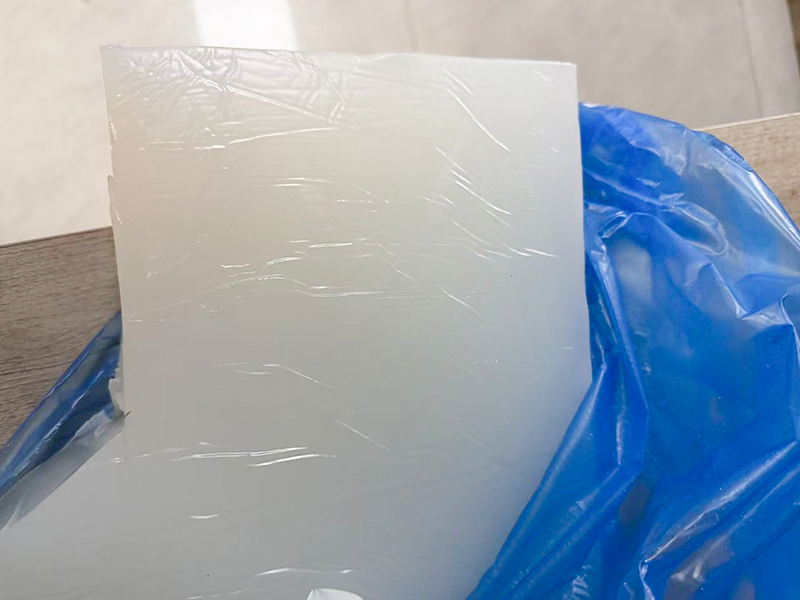
Are You Interested?
Are You Interested?


Content
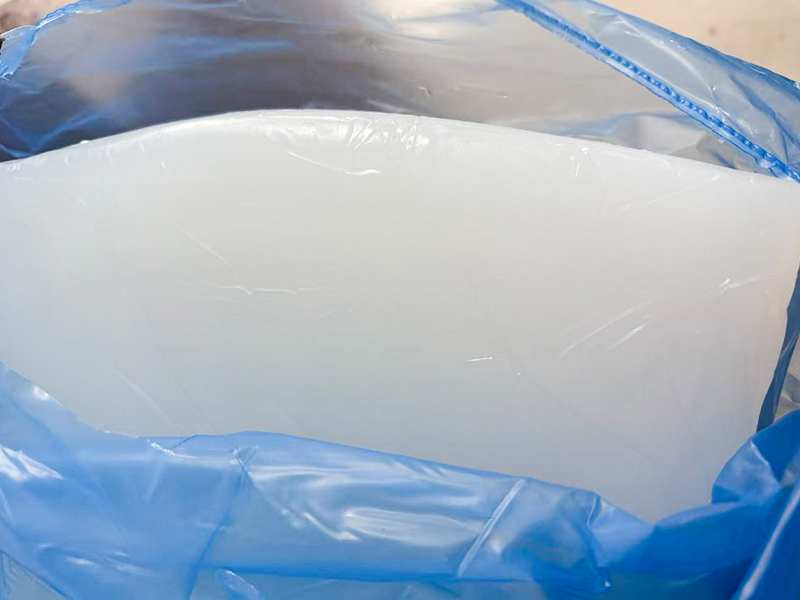
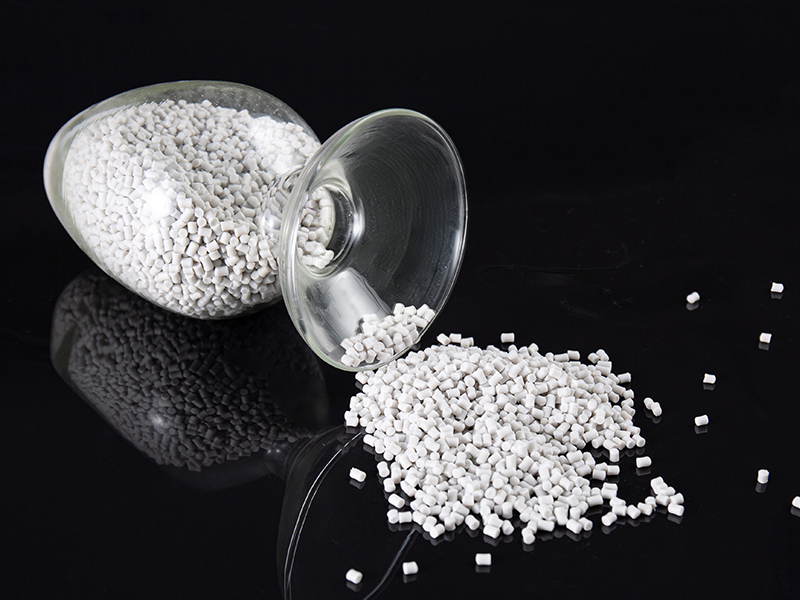
Fire performance is rarely the first specification an engineer writes down, yet it is often the one that determines whether a component passes qualification testing at all. In wire harnesses, connector seals, and enclosure gaskets, a material that reinforces well but degrades under thermal stress can undermine an entire assembly. The 4571-Z Flame Retardant Silicone Compound was developed to close that gap, combining reinforced fumed silica networks with additive systems that resist ignition, limit smoke generation, and hold mechanical integrity after exposure.
This article looks at the compounding science, the test data that matters to specifiers, and the practical selection logic engineers use when comparing flame-retardant elastomers for demanding electrical, transportation, and industrial environments.
Most flame-related material failures in the field are not sudden catastrophic events. They start as slow degradation: a gasket that hardens after repeated thermal cycling, a grommet that loses grip on a cable, or a seal that shrinks just enough to open a gap for arcing or moisture ingress. Flame retardance, in that sense, is not only about how a part behaves in a burn chamber but about how consistently it retains its shape, hardness, and sealing force across years of thermal exposure. Reinforced fumed silicone systems address both sides of that equation at once, which is why they are frequently specified ahead of generic flame-retardant rubbers in critical assemblies.
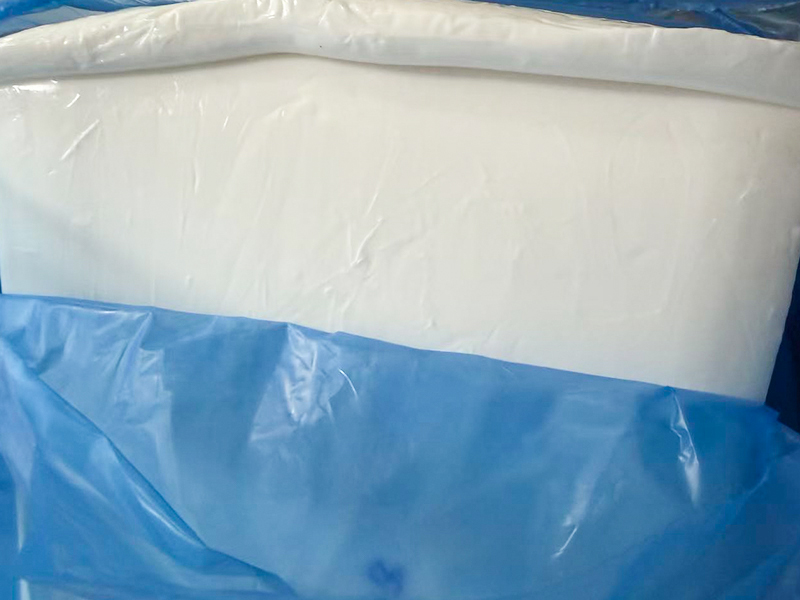
Fumed silica is produced through a vapor-phase hydrolysis process that yields extremely fine, high-surface-area particles. When these particles are dispersed through a silicone polymer matrix, they form a secondary network of hydrogen bonds and physical entanglements that reinforces the rubber well beyond what the base polymer could achieve on its own.
The reinforcing effect scales strongly with surface area rather than particle loading alone. A compound built on high-surface-area fumed silica typically reaches higher tensile strength and tear resistance at a lower filler loading than one relying on coarser reinforcing fillers. Lower loading, in turn, keeps the polymer network more continuous, which helps preserve elongation and flexibility after thermal aging.
Fumed silica also plays a secondary role during combustion. As the outer surface of the rubber begins to char, the dispersed silica particles migrate toward the surface and contribute to a protective ash layer. This layer slows oxygen diffusion into the underlying material and reduces the rate at which flammable decomposition gases escape, working in tandem with dedicated flame-retardant additives rather than replacing them.
Dispersion quality matters as much as the raw specification of the silica itself. Two batches using identical filler grades can perform very differently if one has poorly dispersed agglomerates acting as stress concentration points. Compounders typically control dispersion through mixing sequence, shear intensity, and the use of processing aids that temporarily reduce silica-to-silica hydrogen bonding during compounding, then allow the reinforcing structure to reform once the compound is milled and cured. This is one of the less visible reasons why batch-to-batch consistency data is worth requesting from a supplier rather than assuming that a nominal filler percentage guarantees repeatable mechanical results. Small variations in mixing time or shear rate that seem inconsequential on paper can measurably shift tear strength and flame performance once a formulation reaches production scale.
The UL 94 vertical burn test is one of the most widely referenced benchmarks for flame-retardant polymers. A V-0 classification requires that a specimen self-extinguish within a strict burn-time window after two applications of flame, with no flaming drips that ignite a cotton indicator below the sample. Materials that hold this rating are generally suitable for enclosures and components near live electrical circuits.
A V-0 rating does not mean a material cannot burn; it means the material stops burning quickly once the ignition source is removed and does not contribute significant burning material to its surroundings. Specifiers should also check the sample thickness used during testing, since flame-retardant performance is thickness-dependent and a rating obtained on a thick specimen does not automatically transfer to a thin-wall part.
Limiting oxygen index is a useful supporting metric alongside the pass or fail UL 94 classification because it gives a continuous scale rather than a binary result. A material with a substantially higher oxygen index than the surrounding ambient air composition needs considerably more energy to sustain flaming combustion, which is one reason the gap between a general flame-retardant silicone and a compound engineered specifically around reinforced silica and optimized additive dosing tends to show up clearly on this scale even when both pass the same vertical burn classification.
Flame retardance and mechanical performance are frequently treated as separate specifications, but in service they interact directly. A gasket or seal that survives a thermal event but has lost its elastic recovery can still fail the assembly by allowing moisture or dust ingress afterward. The compounding challenge is delivering flame resistance without sacrificing tensile strength, elongation, or compression set.
Flame-retardant additives, particularly metal hydrate types, are typically added at meaningful loading levels to be effective. At high concentrations, these additives can dilute the polymer network and reduce tensile strength and elongation. The reinforcing fumed silica network helps offset this dilution effect, which is why the ratio between reinforcing filler and flame-retardant additive is one of the more carefully guarded aspects of a compound formulation.
The gap between the compounds in this comparison widens with exposure time rather than staying constant, which points to a difference in degradation mechanism rather than just a difference in starting properties. Compounds that rely heavily on additive loading with minimal reinforcement tend to show an accelerating decline once the additive package begins to break down thermally, since there is little residual filler network left to carry mechanical load. A properly reinforced compound continues to distribute stress through its silica network even as the additive contribution fades, which produces the flatter retention curve that specifiers look for when a part needs to remain serviceable rather than merely non-flammable after a thermal event.
Understanding how a compound resists degradation requires looking at the sequence of events that occur as temperature rises. The 4571-Z Fumed Silicone Rubber platform is engineered to intervene at multiple stages of this sequence rather than relying on a single protective mechanism.
Each stage reduces the energy available to sustain combustion. The endothermic release from the additive package absorbs heat before it can raise the bulk material to its decomposition temperature, while the silica-reinforced char layer that follows acts as an insulating barrier that continues protecting the unaffected rubber beneath it.
What distinguishes a well-engineered compound is the timing between these stages. If the endothermic release happens too early, the additive package can be exhausted before the surface reaches its most dangerous temperature range, leaving the later stages of exposure unprotected. If it happens too late, the bulk material may already have begun uncontrolled decomposition before any protective response engages. Formulation work in this area is largely about tuning additive particle size and decomposition onset temperature so that heat absorption, char formation, and silica reinforcement of that char layer occur in close sequence rather than as isolated, poorly timed events.
No single test tells the full story of a flame-retardant elastomer. The radar comparison below places four common compound classes against five parameters that matter for real installations: flame resistance, tensile strength, thermal stability, elongation retention, and compression set performance.
The wider outer envelope reflects how balanced reinforcement and additive dosing translate into fewer compromises across the property set, rather than excelling on one axis while lagging on the others.
This kind of comparison is particularly useful during supplier evaluation because it exposes trade-offs that a single data sheet number can hide. A compound optimized almost entirely around achieving a headline flame rating may show a visibly narrower envelope on the elongation and compression set axes, which translates directly into shorter service life for dynamic seals that need to keep recovering their shape after repeated compression cycles. Reviewing the full property spread, rather than the flame rating in isolation, is generally the more reliable way to predict how a part will actually behave once it is installed.
Accelerated aging data is useful, but engineers ultimately care about how a seal or gasket behaves over years of service, particularly in engine bays, switchgear cabinets, or outdoor enclosures where temperature cycling is constant. The line chart below tracks tensile retention across four aging intervals at an elevated bench temperature, illustrating how the decline curve for a well-reinforced flame-retardant compound flattens after the initial break-in period.
A flatter decline curve indicates that the reinforcing network is continuing to carry load even as the flame-retardant additives undergo gradual thermal breakdown, which is the behavior specifiers look for when qualifying a material for a multi-year service life.
It is also worth noting how these curves are generated. Bench aging at a constant elevated temperature accelerates degradation mechanisms so that meaningful data can be collected in weeks rather than years, but the relationship between bench hours and real field years is not always linear. Engineers working on safety-critical applications typically corroborate accelerated aging curves with periodic field sampling from installed parts, since ambient humidity, vibration, and intermittent rather than constant heat exposure can all shift the actual degradation rate relative to a controlled laboratory oven schedule.
Flame-retardant fumed silicone compounds are most valuable where three conditions overlap: proximity to electrical energy, limited access for inspection or replacement, and a regulatory or insurance requirement for self-extinguishing materials. The table below summarizes typical placements and the property that tends to matter most in each.
| Application Area | Primary Requirement | Secondary Requirement |
|---|---|---|
| Switchgear and panel gaskets | V-0 flame rating | Compression set stability |
| Wire harness grommets | Low smoke generation | Abrasion resistance |
| Transformer enclosure seals | Thermal aging resistance | Oil and ozone resistance |
| Rail and transit interior parts | Smoke and toxicity limits | Tear strength |
| Battery pack sealing | Thermal stability | Dielectric performance |
In each case the underlying compounding logic is the same: a reinforcing filler network that preserves mechanical integrity, paired with a flame-retardant additive package tuned to the thickness and geometry of the finished part and to the ambient conditions the finished component will actually encounter over its service life.
Geometry deserves particular attention because flame testing is almost always run on flat coupons of a defined thickness, while real parts frequently include thin sections, sharp transitions, or ribbed features that behave differently under flame exposure. A rib or thin wall can reach ignition-relevant temperatures faster than a flat coupon of the same nominal thickness, so engineers working on complex geometries often request supplementary testing on representative part sections rather than relying solely on standard coupon data when the application involves unusual wall profiles.
When comparing flame-retardant elastomers, it helps to work through a short, repeatable checklist rather than relying on a single headline rating. The following points reflect what experienced compounders and test engineers typically confirm before approving a material for a fire-adjacent application.
A compound such as the 4571-Z Flame-Retardant Fumed Silicone Compound is typically evaluated against exactly this list during qualification, since specifiers rarely accept a rating on its own without supporting mechanical and aging data.
It is also worth building in a margin of safety when interpreting any single data point on a supplier data sheet. Test values represent conditions in a controlled laboratory environment, and real installations introduce variables such as contact with lubricants, coolants, or cleaning agents that are not always part of a standard qualification package. Asking a supplier directly about compatibility with the specific fluids and contaminants expected in the application, rather than assuming general chemical resistance from the base polymer family alone, is a small step that prevents a significant category of unplanned field failures.
Not necessarily. Beyond a certain loading level, additional additive can dilute the polymer network and reduce mechanical properties without a proportional gain in flame resistance. Balanced formulation with adequate reinforcing filler typically outperforms simply adding more flame retardant, and it also tends to hold hardness and elongation closer to the unmodified base polymer across the service life of the part.
Fumed silica generally has higher surface area and purity, which produces stronger reinforcement and better optical clarity at similar loading levels. Precipitated silica can be more economical but may require higher loading to reach comparable tensile strength.
Yes, when the base polymer and filler system are selected correctly. Flame retardance and low-temperature flexibility are addressed by different parts of the formulation, so a well-balanced compound can meet both requirements simultaneously.
Ideally the specimen thickness used for testing, tensile and elongation data before and after aging, compression set results, and smoke or toxicity data where applicable, since the flame rating alone does not describe long-term mechanical reliability.
Silicone rubber generally offers strong inherent UV and ozone resistance compared with many organic elastomers, which makes flame-retardant silicone compounds a reasonable fit for outdoor switchgear and enclosure applications where both fire performance and weathering resistance are required over long installed lifespans without frequent recoating or maintenance intervention.

What to stay up to date?
Contact us via the email address below.
No. 16, Industrial Concentration Zone, Daibu Town, Liyang City, China
Copyright 2026 Liyang Tiansheng Insulating Materials Co., Ltd. All Rights Reserved.
Custom Insulation Material For Cable Industry Suppliers

